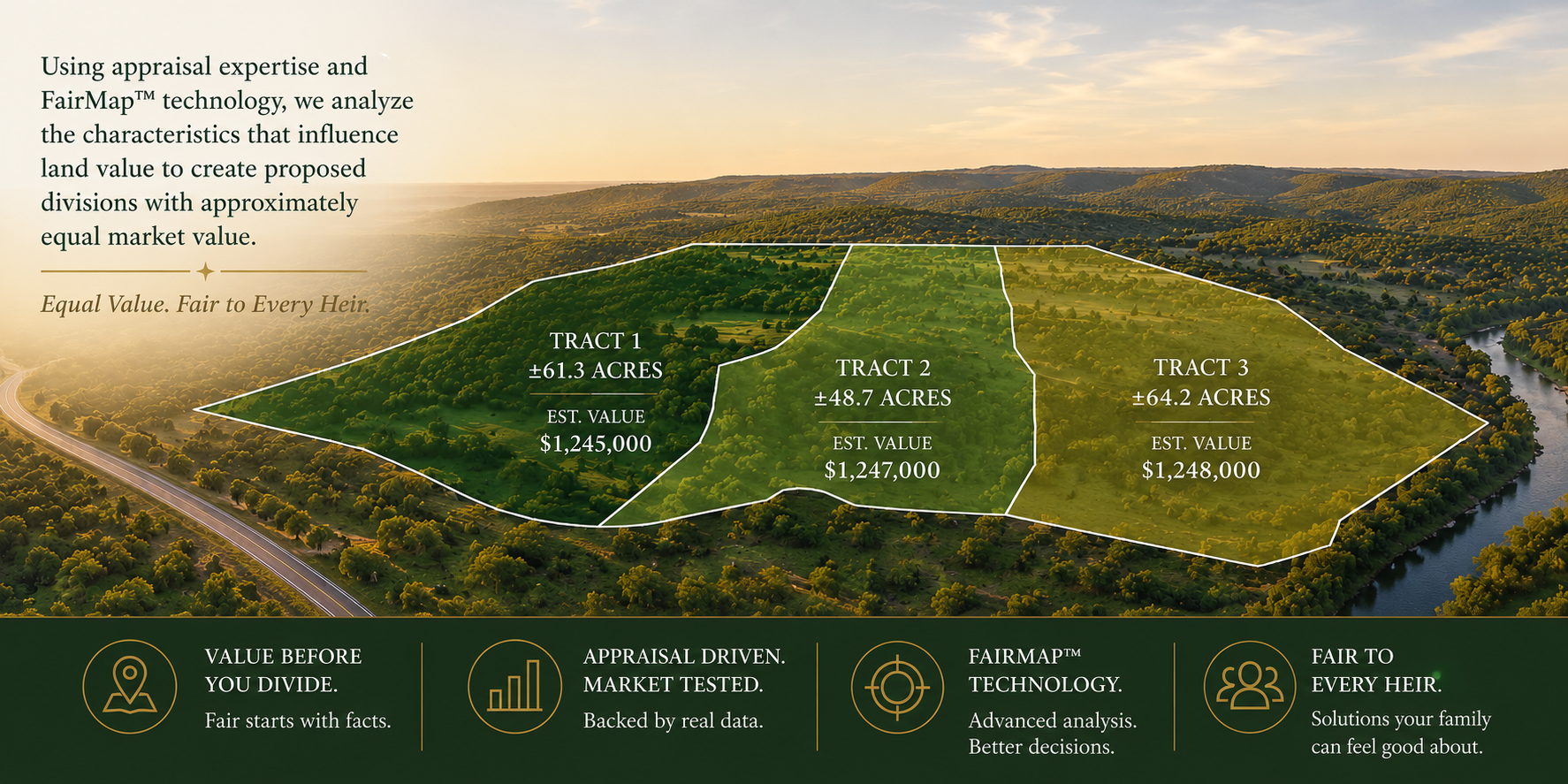
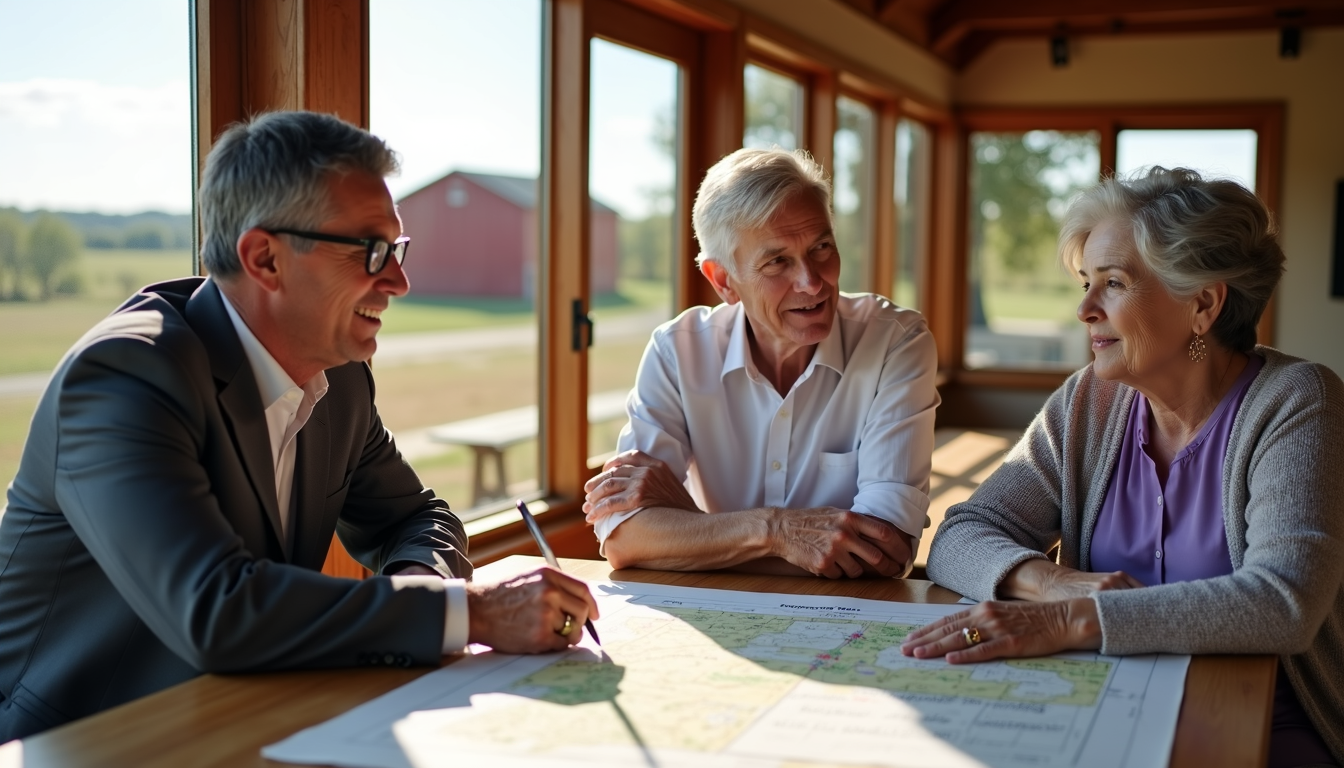
Fair Land Division ConsultationA data-driven consultation service for a dispute-prevention process. The land is analyzed first. The allotments are equalized by value. Then agreed preferences or chance—not favoritism—can determine who receives each allotment.
Equal Acres Don't Always Mean Equal Value. Dividing land among heirs or family members can sound simple. Three heirs. 150 acres. 50 acres each. But what if one tract has the house? Another has highway frontage? One has better views, water, improvements, or access? A fair division of land may have very little to do with dividing the acreage equally. Sifford Appraisal LLC provides professional equal-value land division analysis for families, heirs, and property owners throughout the Texas Hill Country. Before you decide where the survey lines should go, let's determine where they make sense from a value perspective. Let's talk about your land and how you want to divide it.The Problem With Dividing Land by Acreage Imagine three heirs inherit 150 acres. The obvious solution is to give each heir 50 acres. But one 50-acre tract may include the residence and well. Another may have superior road frontage. The third may have less access and no improvements. Equal acreage. Unequal value.The same problem can occur because of: Road and highway frontage • Tract size • Access • Homes and improvements • Wells and barns • Creeks and water features • Views • Topography • Easements and encumbrances The question isn't always: How many acres should each person receive? Sometimes the better question is: Where should the division lines go so each person receives approximately equal market value? That's the question we help answer. Value the Division Before You Draw the Lines.A surveyor can draw the proposed tracts and a fence builder can make them real. But first, someone has to decide where the lines should go. Sifford Appraisal LLC analyzes the property as a whole and considers the market characteristics that influence the value of the resulting tracts. Using appraisal analysis and FairMap™ technology, we can model potential land divisions designed around a target market value for each proposed tract. Divide the value. Then draw the land.CALL 830-456-7694 TO DISCUSS YOUR PROPERTY How the Consultation Works We Inspect the Property We Inspect the PropertyYour appraiser personally inspects the real estate, its improvements, access, frontage, water features, and other characteristics that may influence value.  We Analyze the Market We Analyze the MarketRelevant market data is researched to identify how tract size and the property's differing characteristics may affect the value of the resulting tracts.  We Divide the Land—Together We Divide the Land—TogetherDuring a consultation with the family, we'll discuss each heir's goals and preferences and identify the advantages and disadvantages of different areas of the property. Using FairMap™ technology, proposed division lines are modeled in real time using market data, property characteristics, and the family's input. An approximately equal-value allotment is created for each heir and can be adjusted to reflect individual preferences while maintaining the overall goal of a fair, market-supported division.  We Remove Favoritism From the Final Assignment We Remove Favoritism From the Final AssignmentWhen heirs do not have agreed-upon tract preferences, the completed allotments can be randomly assigned—such as by drawing from a hat or flipping a coin. The land is analyzed first. The allotments are equalized by value. Then chance—not favoritism—can determine who receives each allotment. Your Resolution You receive a visual land-division analysis showing a proposed approximately equal-value division of the property, based on the number of heirs and supported by market data, property analysis, and the consultation process. The result is a clear proposed division the family can use to move the conversation forward and, when ready, take to a licensed surveyor. Once the family determines how it wants to proceed, a licensed surveyor can establish the legal boundaries and prepare the necessary survey documents. Afterward, heirs can proceed with fence changes as desired. Built for the Difficult Divisions |